

Graham Potter still turned up for work on Saturday morning, despite the fact that there was nothing left for him to do. A team meeting was arranged, at which Potter declared to general bewilderment that he had been sacked. Potter departed. Training was put on hold because nobody was available to take it. In time the new coach, Nuno Espírito Santo, arrived on site and promptly began preparations for the Everton game on Monday.
Perhaps on reflection it was certain that West Ham United’s big set-piece appointment went the same way many of their set pieces have gone this season. “We’re not West Ham any more,” unhappy fans have been singing at recent protests against the club’s ownership, but examine the evidence. A mishandled sacking. A fiesta of opposing leaks and briefings. Disorderly performances on the pitch. A vacuum of leadership and direction. Ruinous recruitment. An early relegation battle. Fans in full rebellion. I don’t know. Sounds pretty West Ham to me.
Bowen responds at Everton to earn a point for West Ham in Nuno’s debut match.
In various respects Nuno is the ideal manager for the current mess, which is not completely a compliment. Nuno will sort out the leaky defence, bring some energy in midfield, get the team functioning cohesively, put some points on the board, show restraint to the weaknesses around him and luxuries above him. He will not become a internet joke. He will not go on Monday Night Football to point at a large television and describe what a genius he is.
But what he will also not do is provide any larger sense of mission and purpose, present any broader footballing vision beyond the creation of player advantages, give this agitated and deeply troubled club any better idea of its place in the world. The protests could ease. There may even be some good, inspiring football and a attempt at Europe some day. But West Ham have had these things in the past and it has not given them calm, because what they do not have is finally something far more profound and more identity-based.
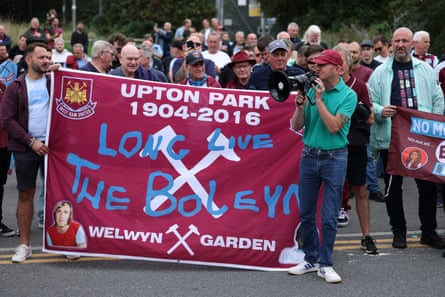
What defines the essence of a football club? Location, people, history, experiences, emblems, anthems. On raw materials alone, West Ham should be one of the simplest pitches in English football: an London's east institution drawing 62,000 a week, the eighth-oldest club in the Premier League. In a league controlled by opaque funds and investment instruments, it is one of the rare in regional ownership. David Sullivan came from in Hornchurch and his deceased co‑owner, David Gold, lived on Green Street. There is a tradition and genuineness, a neighborhood and a international image, and plenty of cash to burn. How do you mess this up?
Maybe the persistent paradox of West Ham is that while it has traditionally been a club in London, it has never truly been a London club. More accurately it is an East End club, a part of town with its own personality and perspective, its own traditions and slang, the grizzled pride that comes with being strangers in your own city. Not tourist London, not mainstream London, but a kind of walled fortress where everyone stuck together, where everyone knew who they were because – crucially – everyone knew where they were.
The London Stadium was conceived as a world-class athletics venue and perhaps the most charitable thing you can say about it today is that it continues to be a premier athletics venue. The shallow rake efficiently spreads the noise up the back straight; the remote seats give a spectacular view of the javelin competition. There is a attractive canal alongside and as much gourmet street food as you can eat. But a walled fortress it is not, and can never be. And honestly it is the most noticeable symptom, if not the fundamental cause, of modern West Ham.
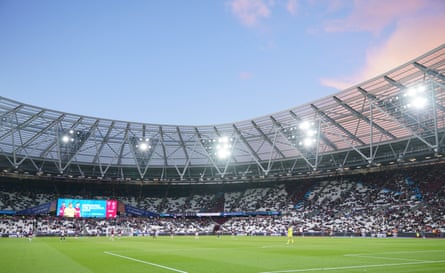
The stadium has ensured the destiny of West Ham, but at the cost of its current state. And place yourself in Sullivan’s and Gold’s shoes for a moment. You took over a club managing massive debts, competing in a quickly intensifying league filled with billionaires and nation-states. You are not sports specialists but business minds, and in this context all your principles are secondary to the primary one: you must not, under any circumstances, get relegated next May.
Everything originates from this desire to avoid the drop. This is why West Ham have a squad full of quick fixes, gathered with no coherent strategy or coherent idea. £40m for Max Kilman, £27m for Nicklas Füllkrug … £7m to take Kalvin Phillips on loan. This is why, of the 86 players signed for a fee since the takeover, only three – Dimitri Payet, Flynn Downes and Mohammed Kudus – have made a large gain. This is furthermore, by the way, how you find yourself bringing in a head of recruitment in January and probably sacking him before the year is out.
This is why, even though being located in one of the most abundant talent seams in the sport, not a single academy player born since 2000 has become a established Premier League starter. The ability is out there. Ezri Konsa played at Senrab up the road. Rio Ngumoha developed his skills in the five-a-side cages of Newham. Ayden Heaven was in the West Ham academy until the age of 13. The under-18s claimed the Youth Cup a couple of years ago, and most of them are remaining with the club. But for causes of opportunity or circumstance, faster-acting clubs or more affluent competitors, this is no longer a place where you can imagine local talent flourishing.
The money is obviously there, too. Premier League revenue, European revenue, the Declan Rice fee, full houses every week, the removal of many reduced ticket categories: why is there so little evidence of West Ham’s prosperity where it matters? Perhaps this clarifies the sense of bitterness between the fans and the boardroom: the enormous extent of waste, the pure separation between a fanbase feeling increasingly poor and an ownership squandering resources, between a fanbase invested for life and a board that can hardly look beyond the weekend. Meanwhile your owner has become ever more unreachable and your vice-chair has a weekly column in the Sun stating why you all just need to calm down, actually.
And on some level the story of West Ham is a parable for something greater than West Ham, something more important even than football. The sense of absence and displacement, communities divided and divided up, the utter absence of influence and agency, the feeling that your effort and your tears are making somebody else rich. And not many places have undergone this process as quickly or violently as east London: a community basically displaced from itself, deprived and redeveloped, overwhelmed with investment that in some way always seems to be flowing somewhere else.
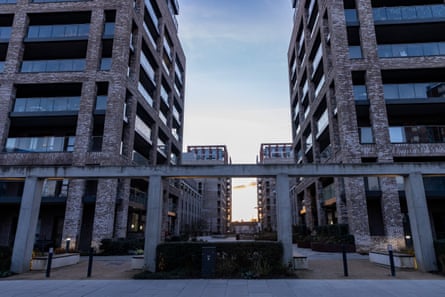
You can still visit Upton Park now, but it seems a little different these days. The old ground was dismantled and sold off for housing. Ken’s Café on Green Street is now something called Bad Boyz Diner. The old supporters’ club headquarters is now a gym. You can buy a flat in Lyall House or Sealey Tower, walk along Ironworks Way, sit in the Boleyn Ground memorial garden that has been landscaped in a bubble-themed design. {Place|Location|Setting


